Tulane University
Fadok Lab
Our intention is to innovate scientific research in neuroscience, advocate social justice within and outside of the lab, and ultimately produce results that improve our understanding of neurological functions and their behavioral impact.
Creating Holistic Science
Our Mission:
The goal of our laboratory is to apply a comprehensive and cutting edge approach to understanding the neurobiological underpinnings of mental illness. We strive for excellence in all we do by believing in the power of curiosity and integrity. Our lab is an inclusive atmosphere where we answer important questions using rigor and teamwork. Importantly, we disseminate our findings to the neuroscientific community and the general public using open, clear communication.
Neuroanatomical Tracing
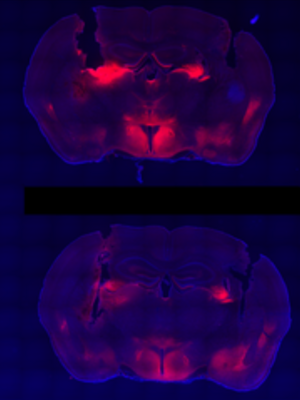
Specialized non-toxic viral injections allow our team to target specific neuronal populations and track projections from or to an area of interest. This methodology allows us to track cell-type specific activation and develop neuroanatomical maps to better understand how regions of the brain work in tandem or sequentially when presenting various behaviors.
Recordings of Neuronal Activity
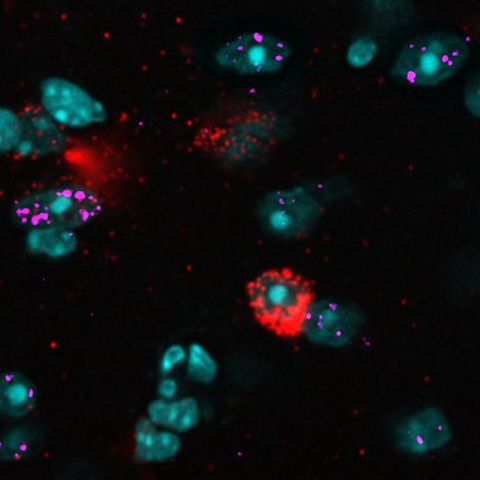
Our team utilizes complex methods such as calcium imaging (shown here), single unit recording, and fiber photometry to gather live recordings of neuronal activity. Though it may appear to the untrained eye as a few flashing white dots, this recording is from an implanted GRIN lens and the florescence shows in vivo calcium transients.
Manipulations of Neural Function
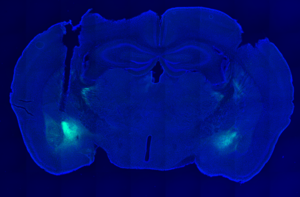
We manipulate neural functioning through a variety of methods. The image shown demonstrates optogenetic manipulation of somatostatin neurons being inhibited in the central amygdala. By utilizing viral injections and fiberoptic implants we can express haloredopsyn (as shown here) to inhibit or channelredopsyn to excite targeted neuronal populations. This manipulation is usually conducted during recall sessions of our serial compound stimulus paradigm utilizing differently colored lasers shone into the implants which provide real time behavioral changes.
How does the brain generate emotions and control survival behavior?
Featured Research
Many research projects in the Fadok Lab are focused on understanding how highly-organized neuronal circuits come to generate and control behavior. Specifically, we are interested in behaviors that have evolved to promote the health and well-being of the organism. Examples include responses to dangerous, or threatening situations, as well as behaviors related to reward.
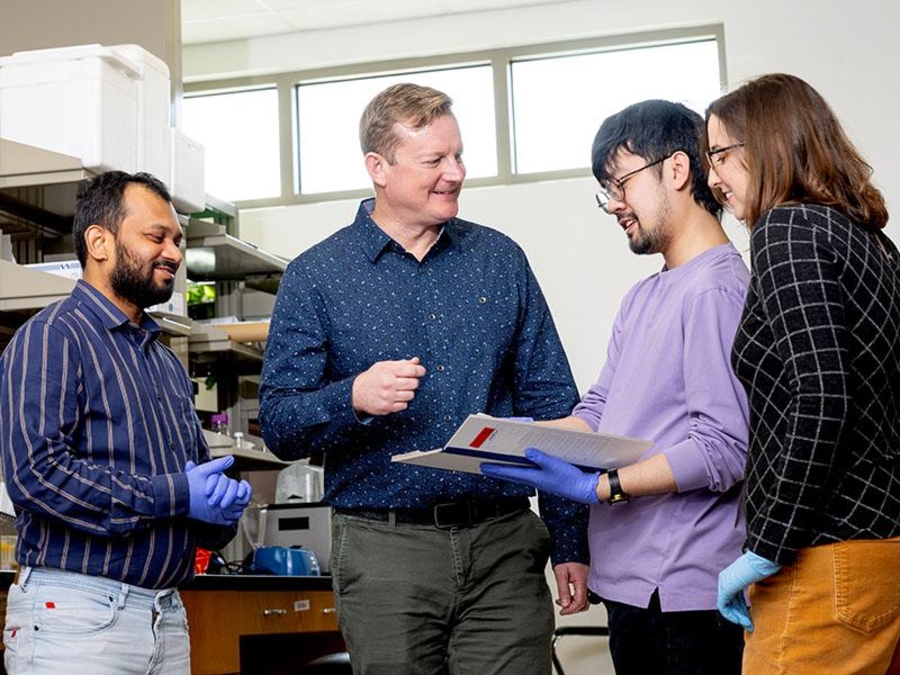
Our Team
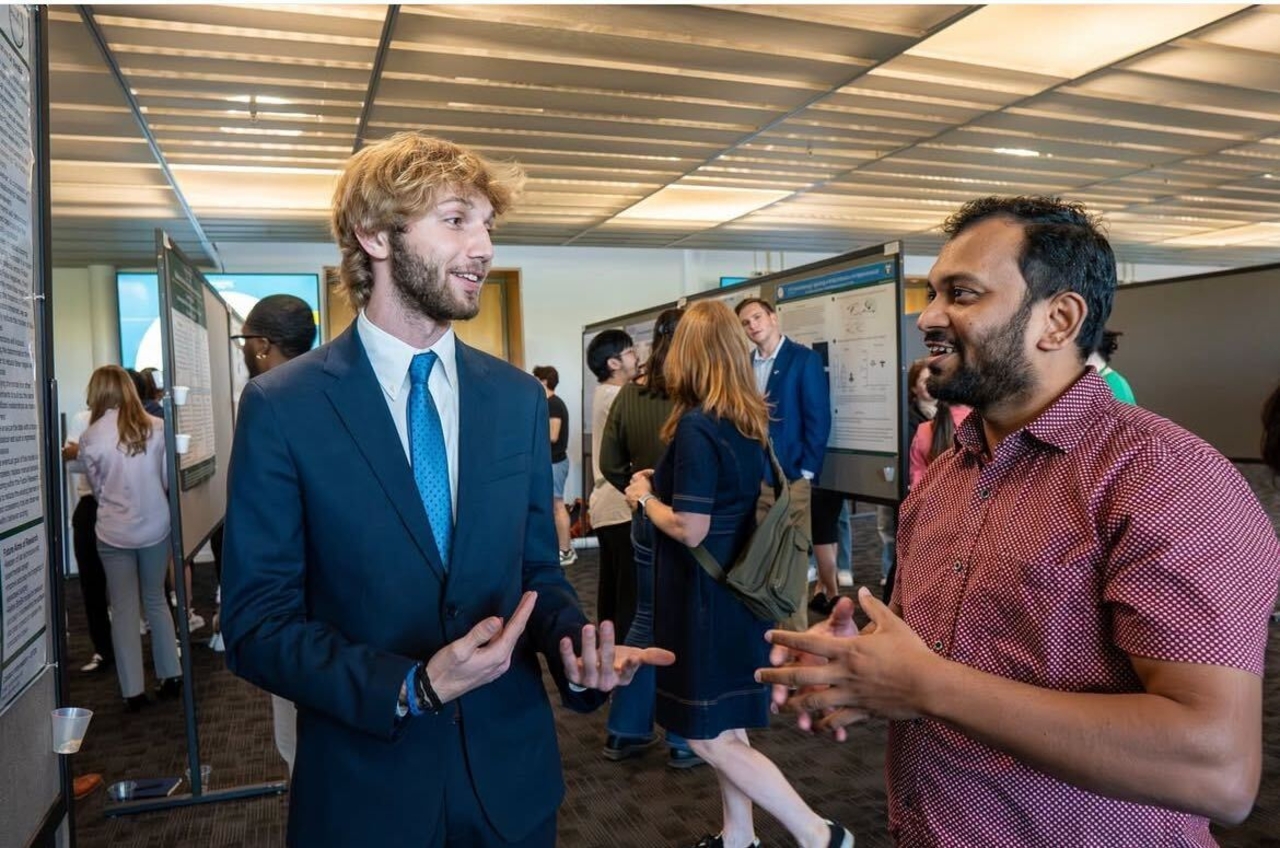
The members of our lab are a unique group of individuals that share a similar interest in mental illness and behavioral research through the lens neuroscience.